








Every day that a pre-release app build sits on a developer’s machine instead of on a tester’s device is a day of delayed feedback — and delayed feedback means slower releases.
App distribution platforms exist to close that gap, giving development teams a reliable, controlled way to host, distribute, and manage mobile app builds, whether builds are headed to internal QA teams for testing, external beta testers, or staged rollout groups ahead of a public launch. By automating the delivery of pre-release versions to specific devices, these tools eliminate the friction that typically slows down the feedback loop between writing code and verifying functionality in the hands of a real user.
The right platform ensures that the moment a build is compiled, it is accessible to the right people without administrative headaches. The wrong choice creates friction — manual provisioning steps, tester limits, missing CI/CD hooks, or a total lack of visibility into what’s happening after a build lands on a device.
Whether you’re scaling a mature DevOps pipeline or modernizing QA, this guide compares the top five app distribution platforms available, exploring how they handle the complexities of iOS and Android distribution for modern, fast-moving teams.
What is a mobile app distribution platform?
An app distribution platform handles the process of moving app builds from development into the hands of the people who need to install and test them. At the core, developers upload signed app builds — APK or AAB files for Android, IPA files for iOS — and the platform stores them centrally. From there, testers receive a notification or link to install.
The modern standard for this process is over-the-air (OTA) distribution. Gone are the days of manually sideloading apps via cables or complex terminal commands. Today, testers access builds through shareable links, scannable QR codes, or dedicated “tester dashboard” apps that notify them the moment a new version is ready for evaluation.
It’s important to distinguish between two types of distribution:
Public distribution, which involves submitting a finished app to app stores like the Apple App Store or Google Play and is the final step in a release cycle.
Pre-release distribution, which puts development builds, release candidates, and beta versions onto devices before they’re anywhere near a store review queue.
For most engineering teams, pre-release distribution is where speed and quality are won or lost.
The use cases span the full development lifecycle. Teams use these platforms for external beta testing with invited users, internal deployment to enterprise employees (sometimes replacing consumer app stores entirely), pre-production QA and stakeholder reviews, and as links in continuous delivery pipelines, where new builds are automatically distributed whenever a branch merges.
As mobile teams scale, distribution evolves beyond a mere file-sharing problem, becoming a systems challenge involving access control, version management, security, and integration with testing infrastructure.
What to look for in an app distribution platform
Evaluating distribution tools comes down to a handful of capabilities that either accelerate or undermine your existing development and testing workflow.
Start with tester management. Inviting five QA engineers is easy. Maintaining organized groups of hundreds of testers across multiple apps, OS versions, and release tracks — with role-based permissions, automated provisioning, and access that can be revoked cleanly — requires a platform built for complexity.
Next is device and OS coverage. Supporting both iOS and Android is table stakes for most teams. What matters more is how well the platform helps you account for real-world fragmentation. A platform that constrains which devices or OS versions can receive builds adds testing blind spots you may not notice until something breaks in production.
CI/CD integration separates platforms that fit into a modern development workflow from those that require manual uploads. Look for CLI tools, a documented API, and native support for the pipelines your team already runs — GitHub Actions, Jenkins, CircleCI, GitLab, and similar tools. Manual build uploads are a sign of a tool designed for a smaller-scale process.
Equally important is feedback and crash reporting, which determines whether testers can communicate what they’re experiencing without leaving the app. Built-in crash capture with stack traces eliminates a full round of back-and-forth that would otherwise happen before a developer could reproduce an issue.
Scalability becomes a concern as your organization grows. Early-stage tools often impose limits on testers, builds, storage, and more. Enterprise teams need platforms that can handle thousands of users and massive build volumes without degrading performance.
Different tools offer varying levels of functionality for grouping and separating distinct types of distributed builds. Unfortunately, the common approach often yields a single, long list of builds for your team to pore over. Instead of providing clear differentiation between build types, most tools focus primarily on user-side grouping, which allows the creation of different test groups and audiences. When your team is working with multiple build types, finding tools to help you smartly group and organize those build flavors keeps things tidy and easy to manage, making everyone’s work smoother and more efficient.
For organizations handling sensitive data, enterprise security is non-negotiable. Does the platform provide role-based access control (RBAC) to ensure that only specific groups (e.g., the “Finance QA” team) can see specific sensitive builds? Features like single sign-on (SSO) integration, private cloud deployments, and build expiration dates help maintain corporate compliance and protect intellectual property.
Finally, consider the tester experience. A confusing install flow, provisioning prompts that appear mid-setup, or a download link that expires at the wrong moment can all cause testers to abandon the process. Platforms that minimize friction get builds onto devices faster and get feedback sooner.
Understanding how to compare pre-prod/beta app distribution tools will help you choose the platform that fits into your existing development and testing workflow.
The 5 best mobile app distribution platforms in 2026
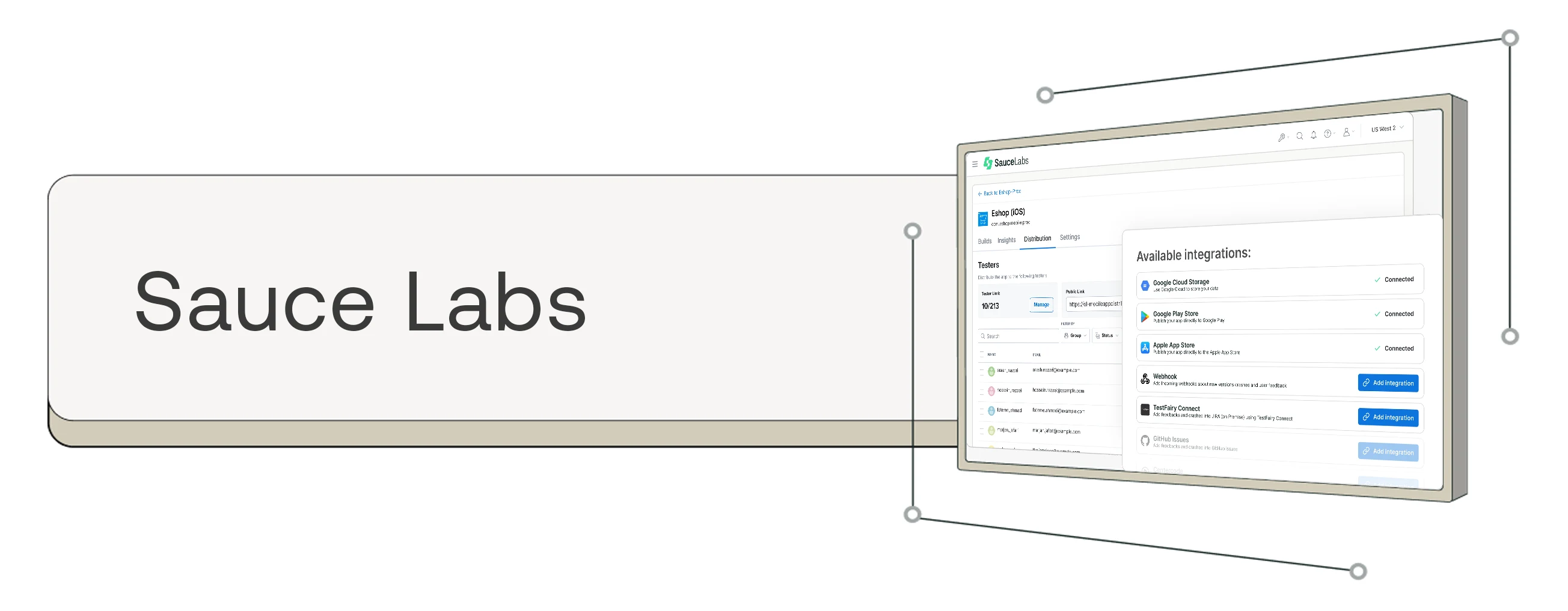
1. Sauce Labs (Mobile App Distribution)
Sauce Labs stands as the most comprehensive solution for teams that refuse to compromise between distribution speed and testing depth. Following the strategic acquisition of TestFairy, Sauce Labs has integrated world-class distribution capabilities directly into its autonomous quality platform.
The platform’s unified approach eliminates the gap that usually exists between getting a build onto a device and actually testing it with professional-grade diagnostics. At a foundational level, Sauce Labs enables teams to securely distribute pre-release app builds via OTA delivery, shareable links, and QR codes. Internal teams, external testers, and stakeholders can quickly access the latest versions without friction. But instead of treating distribution and testing as separate steps, Sauce Labs connects them.
After distribution, testers and QA engineers can install and interact with builds directly on the Real Device Cloud, where 9,000-plus real iOS and Android devices are available for both manual and automated testing, effectively eliminating the gap between “we shipped a build” and “we tested it thoroughly.” Teams no longer need to juggle multiple vendors or tools across the mobile SDLC because distribution, testing, and debugging all happen in one place, reducing complexity and accelerating feedback cycles. No other distribution platform in this guide offers this capability.
Automated test suites run on the same real-device infrastructure used for manual testing, meaning a single CI/CD trigger can upload a new build, distribute it, kick off an automated regression suite on real devices, and surface results — all without leaving the platform. For teams running Appium, Espresso, Cypress, Playwright, or XCUITest, the workflow integration is direct.
When something goes wrong during a test session, Sauce Labs captures video recordings, network traffic logs, device vitals, and crash reports with stack traces. Bug reports filed against distributed builds already include context, rather than requiring a developer to ask a tester to reproduce the issue and describe their device state.
Full CLI and API support connects to every major pipeline, with native integrations for tools like GitLab, GitHub Actions, Jenkins, Codefresh, and CircleCI. New builds can be automatically distributed as part of a CI run, without a developer touching the distribution UI.
The platform supports private cloud deployments with single-tenant isolated environments, private storage, and VPN or firewall-secured connections for organizations with strict data residency or compliance requirements. Mobile App Distribution is built to handle millions of builds and thousands of unique apps without performance degradation — a scale requirement that several competitors in this category simply haven’t been architected to meet.
Scalability is another area where Sauce Labs excels. The platform supports large-scale app management, enabling teams to handle thousands of builds, testers, and applications without performance bottlenecks. Role-based access control ensures that distribution remains secure and controlled at every level.
The result is a platform that delivers measurable benefits:
Faster development cycles through streamlined distribution and testing.
Improved efficiency by consolidating tools and automating workflows.
Reduced risk with enterprise-grade security and controlled access.
Best for: Engineering teams that want distribution and testing unified on one platform, particularly those already running automated test suites and looking to replace a fragmented stack of point solutions. For organizations in regulated industries or with strict compliance requirements, the enterprise security level — private cloud, private storage, SSO, and a full security pack including ISO 27001, ISO 27701, SOC 2, and penetration testing — makes Sauce Labs one of the few distribution platforms that can satisfy both engineering and infosec stakeholders at once.
If your organization struggles with fragmented tooling, Sauce Labs offers something the tools below don’t: a single platform that spans distribution, testing, and debugging across the entire mobile lifecycle.
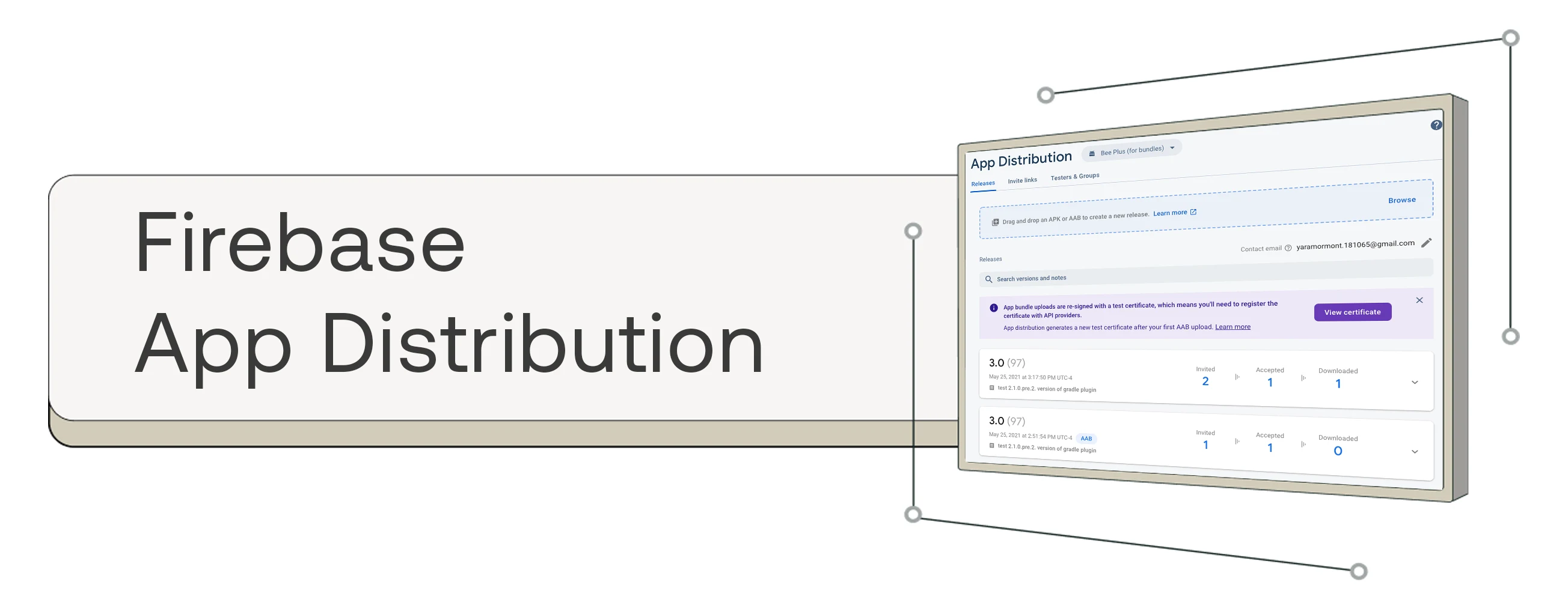
2. Firebase App Distribution
Part of Google’s Firebase ecosystem, Firebase App Distribution is the default choice for development teams already invested in Firebase services. It handles the mechanics of distributing Android and iOS builds to trusted testers, with a setup process that's intentionally lightweight.
The platform is designed for simplicity. Teams can upload builds through the Firebase console, CLI tools, or integrations with Gradle and Fastlane. Testers are invited via email and grouped for easier management. The tightest value proposition is ecosystem integration: Crashlytics crash reporting, Google Analytics, and Remote Config all operate under the same umbrella, so a team already using those services gets a coherent set of signals from a single source.
Where Firebase falls short is scale and depth. Tester capacity is capped at 500 per project and 200 per group — numbers that work fine for small teams but create planning overhead as projects grow. Tester management is basic: There are no role-based permissions, no enterprise SSO options, and no real-device testing infrastructure. Firebase distributes builds, but once a build lands on a device, testing is entirely the team's responsibility on their own hardware.
Best for: Android-first teams and projects already using Firebase services that need a free, low-overhead starting point for beta distribution.
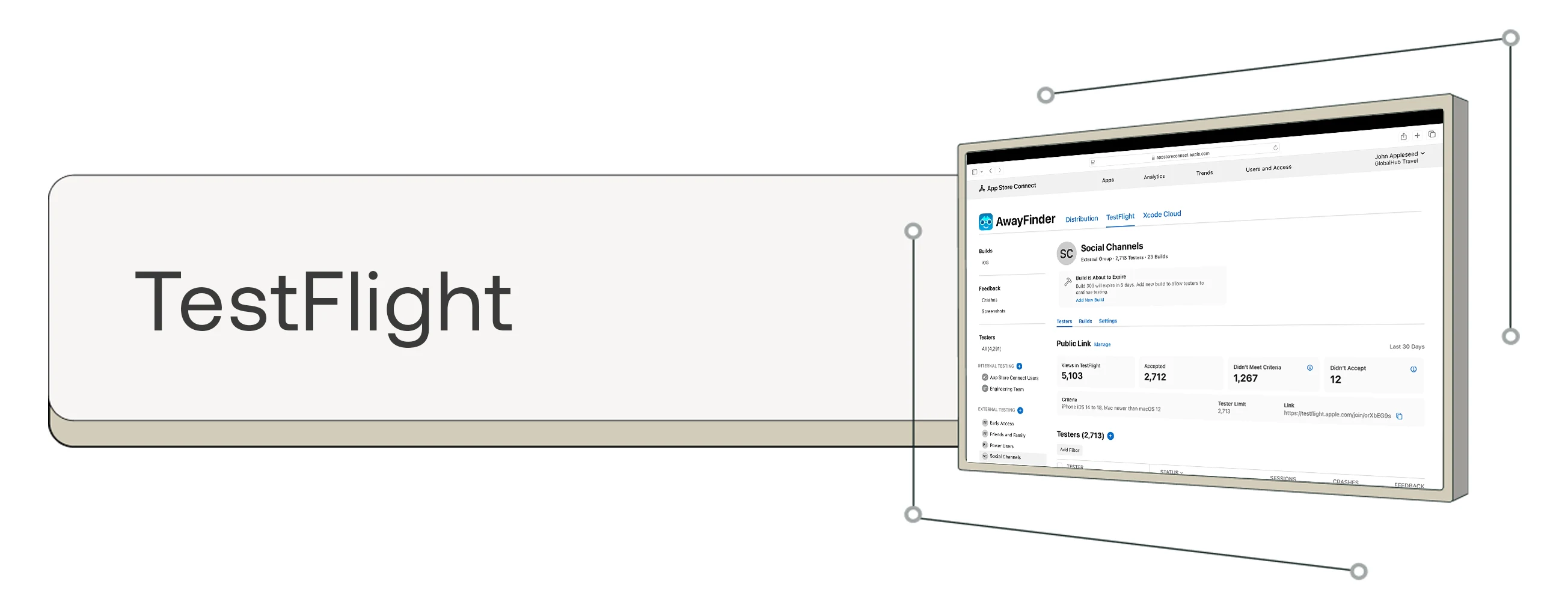
3. TestFlight
TestFlight is Apple’s native beta testing and distribution tool, accessed through App Store Connect. For iOS teams, it remains the zero-friction default, with no third-party account to manage, no separate SDK to integrate, and a clean install experience for testers through the dedicated TestFlight app.
Up to 10,000 external testers can be invited to a beta, with a separate internal track for up to 100 users. New builds generate automatic update notifications, which helps keep testers on the most recent version. Since TestFlight lives inside App Store Connect, the handoff from beta testing to a production App Store submission is seamless.
The constraints are real, though. TestFlight is iOS only. Android builds don’t exist in this ecosystem. External builds require Apple review, which typically takes 24 to 72 hours and can stall a rapid iteration cycle. There’s no native CI/CD API, so most teams layer Fastlane on top to automate uploads. Tester management is flat, with no group segmentation or role-based access beyond the internal/external distinction.
Best for: iOS-only teams that need a free, Apple-native distribution path and aren’t distributing Android builds.
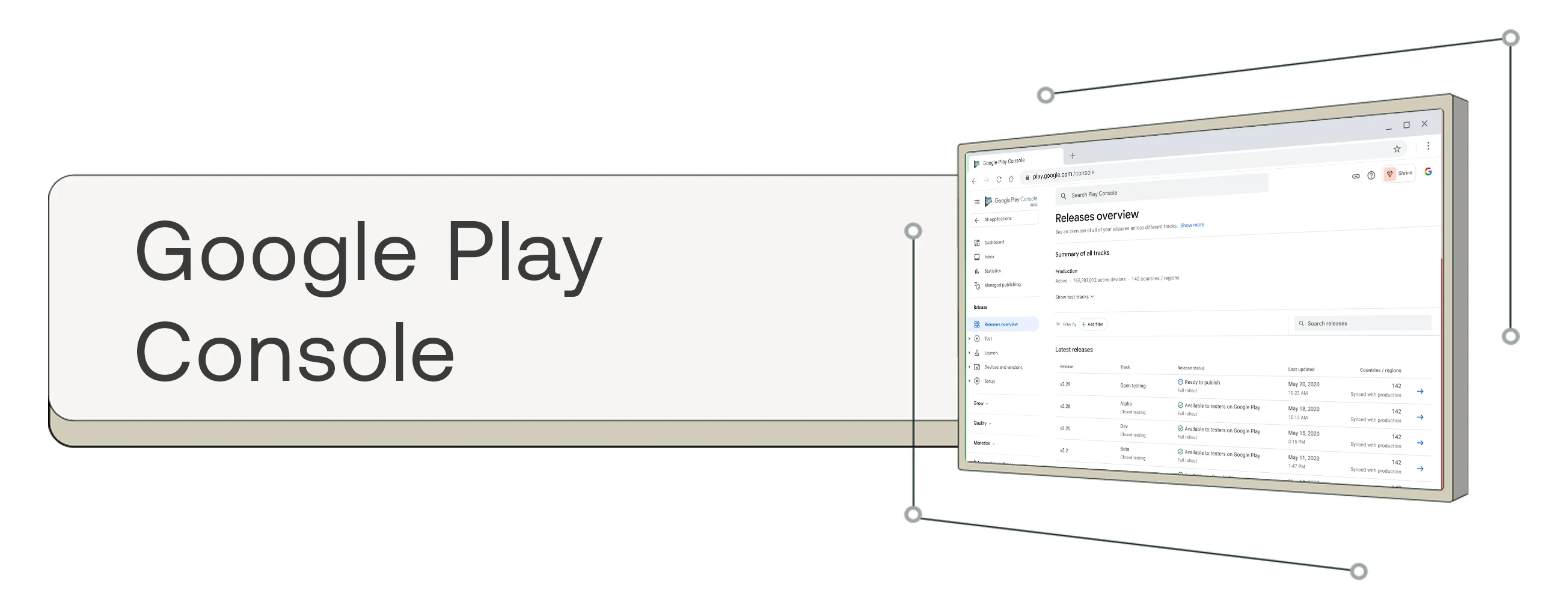
4. Google Play Console
Google Play Console’s testing tracks give Android teams a structured path from internal development builds to public release. The internal testing track supports up to 100 testers with near-instant availability and no review process, which is useful for rapid iteration cycles. Closed testing tracks expand that to larger invited groups, and open testing is available for broader public betas before a full production rollout.
The in-console dashboard surfaces crash rates, ANRs, performance metrics, and user feedback, giving release managers meaningful signal before moving a build to production. Staged rollouts let teams push a new version to a percentage of users, which is a distribution capability none of the other tools in this guide offer at the production release level.
The limitations mirror TestFlight’s in one key respect: it’s platform-exclusive. No iOS support. Beyond that, the tester enrollment experience can be clunky. Testers must opt in via a public link or email invite and install via the Play Store itself, creating a flow that’s more confusing than on dedicated beta platforms. Like TestFlight, Play Console is focused on release management rather than testing infrastructure. It doesn’t provide real device access or advanced testing capabilities.
Best for: Android teams managing staged rollouts to production via Google Play, especially those planning phased release strategies.
5. Appcircle
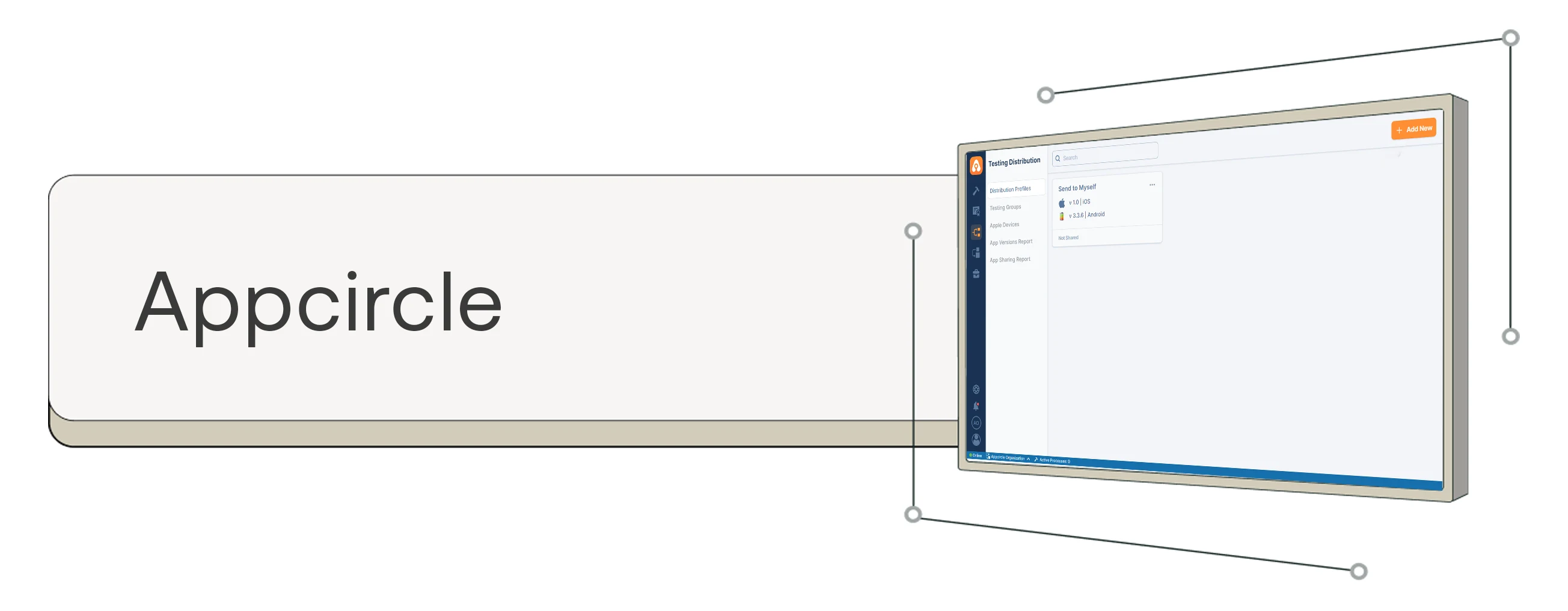
Appcircle combines CI/CD pipelines with app distribution and an enterprise app store model, positioning itself as a flexible solution for teams that want build automation and distribution in one platform.
The Testing Distribution module handles pre-release iOS and Android builds to designated groups, with API and CLI support for automated distribution. An Enterprise App Store module lets organizations securely distribute internal apps to employees with SSO support. Integrations exist for Azure DevOps, GitHub Actions, Jenkins, and more.
Compared to industry giants like Sauce Labs or Google, Appcircle has a smaller ecosystem of integrations and community support. While it excels at the build and distribute parts of the cycle, the platform lacks a real device cloud for executing automated test suites or manual deep dives.
Best for: Organizations looking for a combined build-and-distribute tool for internal enterprise applications.
Mobile app distribution platforms compared
Platform | iOS | Android | Real device testing | CI/CD integration | Tester management | Crash reporting | Best for |
Sauce Labs | Yes | Yes | Yes (real devices) | Full CLI + API | Advanced | Yes | Unified testing + distribution |
Firebase App Distribution | Yes | Yes | No | CLI + Gradle | Basic | Yes (Crashlytics) | Firebase-native teams |
TestFlight | Yes | No | No | Via Xcode or third-party tools | Basic | Yes | iOS beta testing |
Google Play Console | No | Yes | No | CLI + API | Moderate | Yes | Android staged rollouts |
Appcircle | Yes | Yes | No | Built-in CI/CD | Moderate | Limited | CI/CD + distribution |
Choose the right app distribution platform for your team
The best mobile app distribution platform is the one that fits the actual complexity of your testing process, not just the OS you’re building for today but the infrastructure, team size, and testing maturity you’re building toward.
If you’re working within a single ecosystem and need a lightweight solution, tools like TestFlight or Firebase App Distribution can get you up and running quickly. They’re accessible, familiar, and often free.
For teams that want distribution and testing to operate as a single, connected workflow — where builds are distributed, tested on real devices, debugged with rich artifacts, and pushed through automated pipelines without jumping between tools — Sauce Labs is the clear choice. It’s the only platform in this guide that brings real-device cloud testing and enterprise-grade distribution together under one roof.
Ready to streamline your release cycle? Start distributing and testing your mobile apps on real devices with Sauce Labs for free!

Share this post




